Part of the Expert Perspectives on Canine Health Series
For most people, the first thing that comes to mind when thinking of animal chiropractic is the treatment of musculoskeletal conditions. It is true that chiropractic usually works wonderfully for those issues and I see many animal patients in my clinic who present with limping, gait abnormalities, abnormal movement, side sitting or a head tilt. What’s not as well known, however, is the benefit animal chiropractic may have for something else entirely: neurologic conditions.
Click here to read this article in its original magazine format.
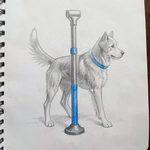
The simplest way to explain how chiropractic can affect a neurological condition is through what we call the “safety pin cycle.” Imagine a safety pin. The top of the safety pin is the brain and the bottom of the safety pin is the body. The brain sends signals out to the body and the body sends signals back to the brain; this happens every second of every day through the nervous system.
The safety pin is closed if the signals are properly going out to the body and back to the brain. This signifies normal function, but if there is interference in a nerve, we now have the safety pin opened. The brain may be sending out a signal, but it may not be going out to the body normally, or when it does, it may be the wrong message entirely! If that message is wrong, then surely the message from the body back to the brain is also wrong, which may cause a neurological imbalance. So, how do we close that safety pin back up? A chiropractic adjustment! A chiropractic adjustment can remove any interference or impingement on a nerve so that normal function can return.
An animal chiropractor does this by finding and fixing subluxations (misalignments) of the spine and specifically correcting them into the proper positioning. There is a wide spectrum of conditions, ranging from mild to severe, under the umbrella term “neurological condition.” Let’s take a look at the top five neurological conditions I see in my clinic that can stem from a neurological basis. (Note that there may be other possible causes, but for the sake of this article, we’re only going to discuss the neurological causes.)
The first condition, allergies, is something we rarely think of in conjunction with either neurological conditions or chiropractic. However, there is a direct link between the nervous system and the immune system. The body’s immune system helps prevent disease and infection, in addition to handling stress and overall well being. The immune system also tackles any invasion of foreign substances, such as pollution, mold and dust.
Allergic reactions are the most frequent immune disorders and happen when the body overreacts to something in the environment and overproduces neutralizing chemicals called anti-histamines. Chiropractic removes any stress off the nervous system, allowing the immune system to operate more effectively.
The second condition is paresthesia, which is a fancy word for that pins and needles feeling or numbness you experience when your foot “falls asleep.” This feeling can happen in animals, too! Dogs who excessively lick or chew their feet may be experiencing paresthesia as licking and chewing is their way of trying to make that feeling dissipate.
Nerve interference in one or more of the nerves that travel from the spine and into the affected leg(s) can cause paresthesia and an adjustment can take interference off that nerve and allow the nerve to heal and function properly. Then, with the paresthesia sensation removed, damaged skin can begin to heal and fur can begin to grow back since the dog will not want to lick and chew.
Seizures and ataxic (“drunken sailor”) gaits can also have a neurological basis. The reason I am discussing both together as our third and fourth conditions is that in both, I most often find that
the very first vertebrae directly behind the skull, called the atlas, is severely misaligned. This is the area where the brain stem develops into the spinal cord, and where all the signals from the brain begin to go to the rest of the body.
If there is interference in the nervous system here, all of these abnormal nerve signals can manifest into seizures, including small tremors, cluster seizures, grand mal seizures or a condition that causes an ataxic gait with the dog being extremely wobbly when trying to walk. Pulling on a collar by a leash, normal play, landing off balance or falling are some examples that cause the atlas to shift and lead to these conditions.
Sudden paralysis, the fifth condition, also has a neurological basis. These are usually cases when the dogs are totally fine one day and then dragging their legs the next. If any signs are apparent before this occurs, it’s usually some knuckling of their paws. The causes that I find most often are usually a long standing misalignment in the upper neck or mid-back, or a herniated disc.
Depending on the case, the dog may have also lost bladder or bowel control, and possibly deep pain sensation, if the condition has progressed. With chiropractic care, we usually see a return of deep pain first, bladder/bowel function next and, lastly, return in motor function after feeling in the affected legs returns. Some paralysis cases may not be chiropractic candidates and may require immediate surgery, so check with your veterinarian.
If your pet is experiencing any of these conditions, animal chiropractic may be able to help, but only take your pet to an animal chiropractor board-certified through the American Veterinary Chiropractic Association. You can find an animal chiropractor near you by visiting AVCAdoctors.com.
About the Expert
After achieving a Bachelor’s of Science at Eastern Illinois University, Dr. Erin O’Connor attended chiropractic school at Palmer College of Chiropractic in Davenport, Iowa, where she earned her Doctor of Chiropractic. She then attended Parker University in Dallas, Texas, to become an AVCA board certified animal chiropractor.
Dr. O’Connor is co-owner of Vitality Chiropractic Center in Aurora, where she works alongside her husband, Dr. Paul Nottoli. Together, they provide whole family care to both people and pets. Dr. O’Connor also provides care at Autumn Green Animal Hospital in Geneva once a week on Mondays.
In addition to running her practice, Dr. O’Connor mentors animal chiropractic students, lectures for dog groups and is the president of the Holistic Chamber of Commerce-Chicagoland. She also volunteers care at Fox Valley Wildlife Center. The most common animals she adjusts are dogs and cats, but has adjusted many others, including rabbits, small birds, geese, ducks, raccoons, opossums, deer, squirrels and even a woodchuck!
Dr. O’Connor enjoys traveling, cooking, scuba diving, fine arts and spending time with her husband and pets, which include an Italian greyhound, border collie, African grey parrot and a mouse.
To learn more about animal chiropractic for your pet or to schedule an appointment with Dr. O’Connor, please call Vitality Chiropractic Center in Aurora at 630-499-4078 or visit myvitalitychiropractic.com online. For appointments in Geneva, call Autumn Green Animal Hospital at 630-232-2222.
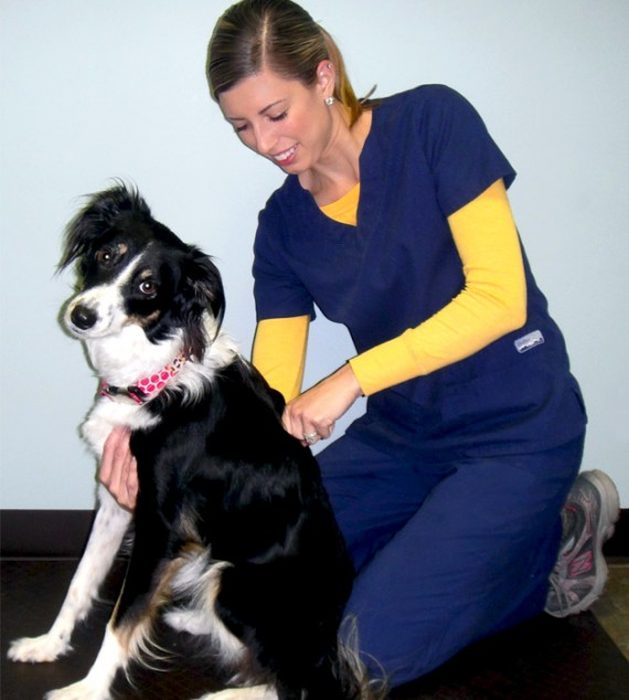
Photo: Dr. Erin O’Connor gives her border collie Lolo a chiropractic adjustment.
Recommended