

Part of the West Suburban Dog Expert Perspectives on Canine Health article series.
Warmer weather means spending more time outside for both you and your pet. That’s something we all enjoy, but it can also mean increased exposure to a variety of insects.
Parasites are organisms that live in or on your pet, causing harm. Minimizing parasites is an important part of keeping your pet healthy. Some pet parasites can cause problems for people, too, so keeping them out of your home is also good for you and your family.
External parasites are insects or arachnids that live on the skin or in the ears and feed on blood or cell fluids. Most are large enough to be visible, but it’s easy to miss them on a furry pet. Your veterinarian can tell you about parasite control products that are safe, convenient and effective.
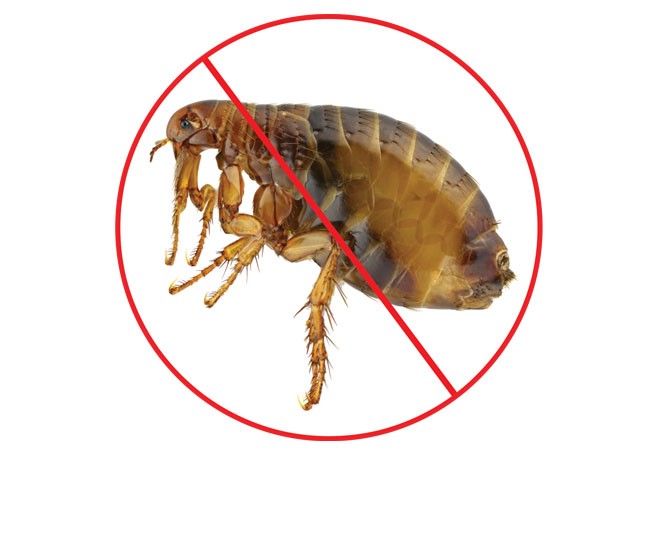
Flea season starts in May and goes through Winter. Fleas are about twice the size of the head of a pin and are brown in color. They scurry rapidly through your dog’s coat and can jump several feet. Fleas can be detected by combing your pet with a fine-toothed flea comb. The presence of flea droppings is another sign. Flea droppings look like black sand. A
good trick for differentiating flea droppings from dirt is to add a drop or two of water. Flea
droppings contain partially digested blood and produce a red color when wet.
Fleas are a common pest that can affect cats and dogs. Their bites can cause severe skin irritation and allergies along with itchy, red bumps that can lead to excessive scratching by your pet. In turn this scratching can create raw spots, which can become infected. Severe infestations can cause anemia. Fleas are also the carriers of tapeworms. Although fleas prefer furry creatures, they can cause itchy bites on people as well.
There are many products available for flea control. The newest, safest and most effective are available from your veterinarian. These products are also very convenient, requiring only a few drops of liquid applied once a month. You may still notice a few fleas occasionally. Sprays for the home and garden can minimize this problem. Make sure to read and follow label directions on all flea products. Some products can be dangerous to you or your dog if they are used improperly.
Lice are whitish insects that are smaller than fleas. Their eggs, or nits, can be detected on hair shafts. In dogs, lice are much less common than fleas. Lice can cause skin irritation and anemia. Insecticidal shampoos and other products can be used
to treat lice, but it is very important to treat the bedding as well. Although people get lice, they are a different type, so you don’t have to worry about getting lice from your pet.
Ticks are arachnids, relatives of spiders. Their size varies tremendously, depending on the type, age, sex and whether or not the tick has fed on blood. Larval ticks may be smaller than the head of a pin, whereas some adult ticks are larger than a corn kernel. Ticks are detected by careful examination of your pet’s skin and ears.
Pets that spend a lot of time outdoors, especially in wooded areas or tall grasses, are more susceptible to ticks. However, other animals can carry ticks into yards, allowing pets to pick them up without ever leaving your property. Ticks can cause anemia and are carriers of many serious diseases, including Lyme disease and Ehrlichia. They can also bite people. Some topical flea products available from your veterinarian for flea control are also effective for ticks. In addition, powerful tick-specific products may be recommended.
Mites, like ticks, are arachnids, but they are much smaller. Mites are difficult or impossible to see without magnification. Ear mites can be detected by your veterinarian during a physical examination. Skin mites usually require a skin scraping test. Symptoms vary depending on the type of mite, but can include itching, irritation and hair loss. Skin mites are the cause of mange. Effective mite treatments, available by prescription, often take several weeks to produce results.
To be safe, be sure to utilize preventative measures offered by your veterinarian. Be aware of your pet’s behaviors, such as lack of appetite or decrease in energy, and contact your vet with any questions. Regular visits to your veterinarian are sure to help you and your pet stay healthy and safe from insects this spring and summer!
About the Expert
After completing his undergraduate work in Animal Sciences at Iowa State University, Dr. Prince, Diplomate American Board of Veterinary Practioners, obtained his veterinary degree from the University of Illinois. He is one of only 15 Board Certified veterinarians in the state of Illinois to achieve Diplomate status with the American Board of Veterinary Practitioners, specialty Canine and Feline Practice, which he received in 1993. He re-certified in 2002 and again in 2012.
In practice since 1984, Dr. Prince is a member of the Chicago Veterinary Medical Association, Illinois State Veterinary Medical Association and the American Veterinary Medical Association.
Dr. Prince enjoys practicing preventative care for companion animals and has a special interest in orthopedic and soft tissue surgical procedures, neurologic disorders and oncology. To stay current with state-of-the-art care, he attends more than 100 hours of continuing education classes per year.
He is the proud owner of a black and tan Doberman named Del and a Boston Terrier named Bella. In his spare time, he enjoys watching all of the major Chicago sports teams (yes, he likes both the Cubs and the White Sox!), golf, reading and spending time with his two wonderful children.
Recommended